Belarus Holocaust Memorials Project
  • Home
  • About Us
  • The Memorials
  • Press
  • Resources
  • Contact
  • Русский
    Home > Kosovo
Rollover
  • Rollover
  • Rollover
  • Rollover
  • Rollover

Kosovo

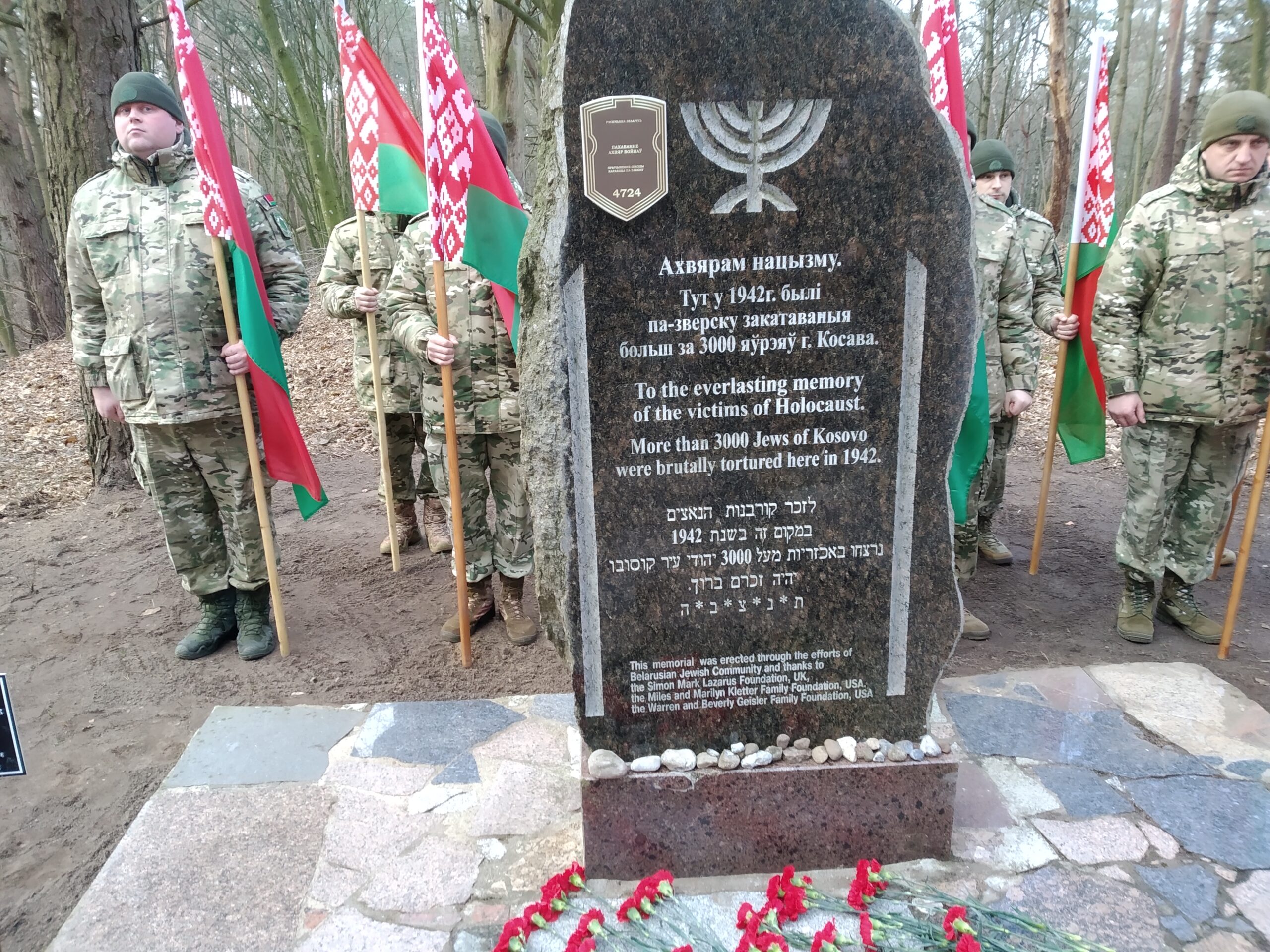
“On July 1, 1941, the Nazis advanced and took control of the town and mandated that all Jews wear yellow stars. When the residents did not cooperate, the Germans publicly executed the Jews who were responsible for the community. The deadline for wearing yellow stars was extended to July 14 and a nine-member Judenrat was established. The Judenrat was charged with collecting a heavy ransom (2.2kg/4lb of gold). Much of the livestock was confiscated and 22 town dignitaries were arrested; the Judenrat was able to get ten of the dignitaries released by delivering a large sum of money but the other twelve were executed.” (“Holocaust.” Kosava, Belarus: A KehilaLinks Site, JewishGen KehilaLinks)

“On July 19, 1942 the Germans stopped sending the Jews to perform labor and the ghettos were besieged…It became apparent…July 24, 1942, that terrible things were about to happen. All the patients in the Jewish hospital were murdered by the Germans. After the commencement of Sabbath prayers at the “Court” ghetto, Ukrainian police entered and told them that no one could leave the room, they could not use the bathroom nor could they look out the windows: they all stayed on the floor below the level of the windows. Through the night two Ukrainian police threatened the Jews and tried to obtain their valuables while a third Ukrainian policeman kept watch outside as the Germans would want the loot for themselves…Around 9AM on Saturday, July 25, 1942 a Germans sergeant arrived at the ‘Court’ ghetto and the Ukrainians stopped their action. An hour later three cars and seven trucks came. The Jews, about 600, were lined up and any shoemakers and tailors were asked to step out of the lines. Local troops assisted torturing and kicking the remainder of the Jews who were then ordered into the trucks. Those who could climbed in and the others were stacked on top of them, several layers deep in the trucks — everyone’s faces towards the floor. The people on the bottom were suffocated and if anyone higher up tried to lift his or her head, the local troops used their boots to smash down that person’s head. All the bodies were taken to Mereczowszczyzna and added to those already in the pits.” (“Holocaust.” Kosava, Belarus: A KehilaLinks Site, JewishGen KehilaLinks)

“Two hundred other people hid in the attic of the Tarbut school through the evening of the slaughter. The following day, the head of the police came to them and told them that they could come out and that nothing bad would happen to them. Indeed, they were permitted to leave and formed a new ghetto that was not guarded. They lived there for over a week until August 2, 1942 when Soviet partisans attacked. At the end of a four-hour battle, the partisans prevailed and took all of the Jews with them. When they left town they realized that they had too many people. They told the old people to return to town and they only took the young ones with them. The German police ordered the ones who returned to dig their own graves. After that the Germans killed them all. Other accounts of this event say it occurred in September. The the Germans were able to round up 200 people and they were shot at Yalovasto. A marker there commemorates these deaths.” (“Holocaust.” Kosava, Belarus: A KehilaLinks Site, JewishGen KehilaLinks)

Kosovo

Region:
Brest
Date of Installation:
2025
Number of Jews Who Perished:
3000
Date of Massacre:
1942
Memorial #9

Next Memorial: Medvedichi (or Medvedichy)

Previous Memorial: Kamyanets (or Kamenets)

For more information about this memorial’s location, please contact Igor Kraversky of the Union of Belarussian Jewish Community Organizations by phone at +375 29 6663000 or by email at 6663000@gmail.com.

We wish to thank Karen Morris for her generous support of this website and for her efforts to preserve the memory of the victims of the Holocaust.

Copyright © 2013 – 2026 Belarus Holocaust Memorials Project
Designed by Media Mezcla