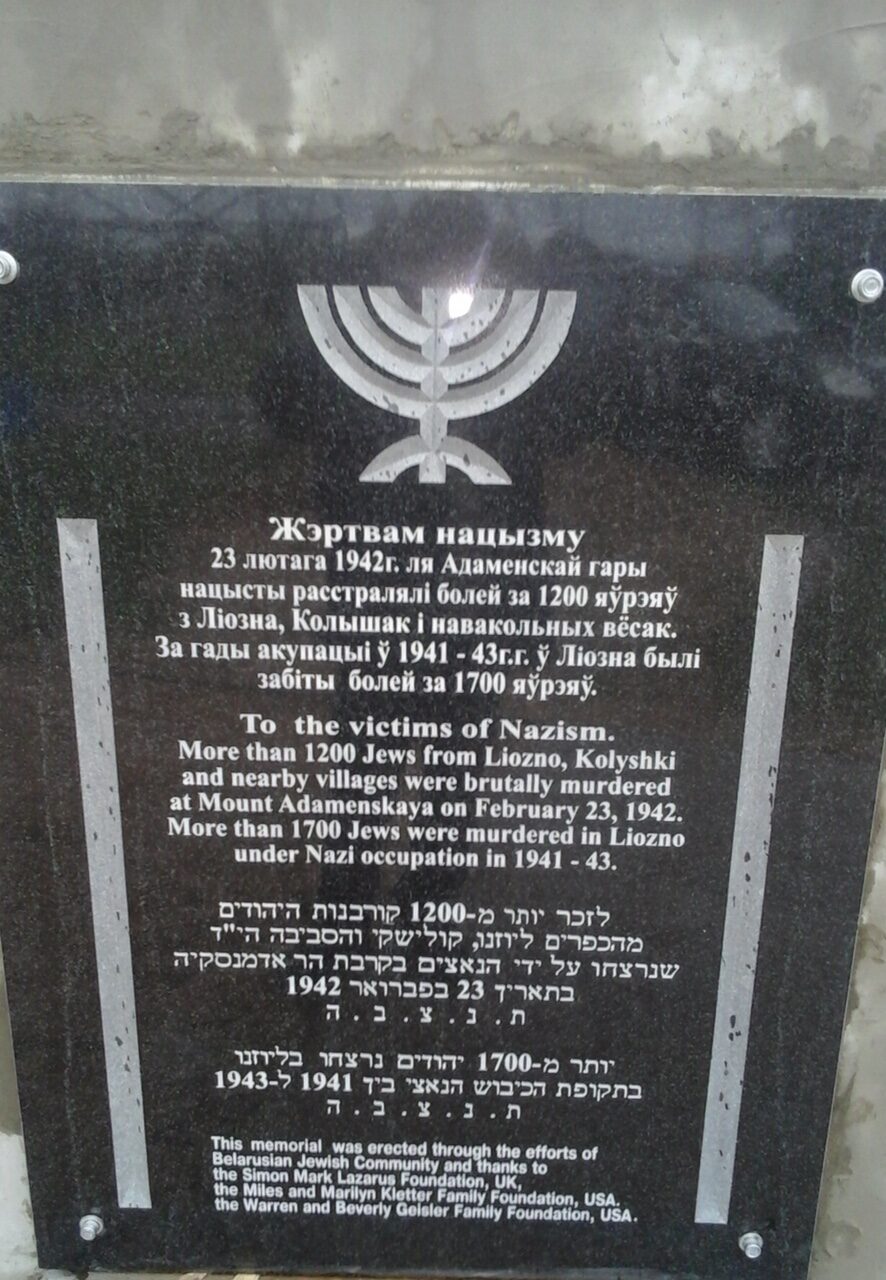
Liozno (Adamensky Hill)
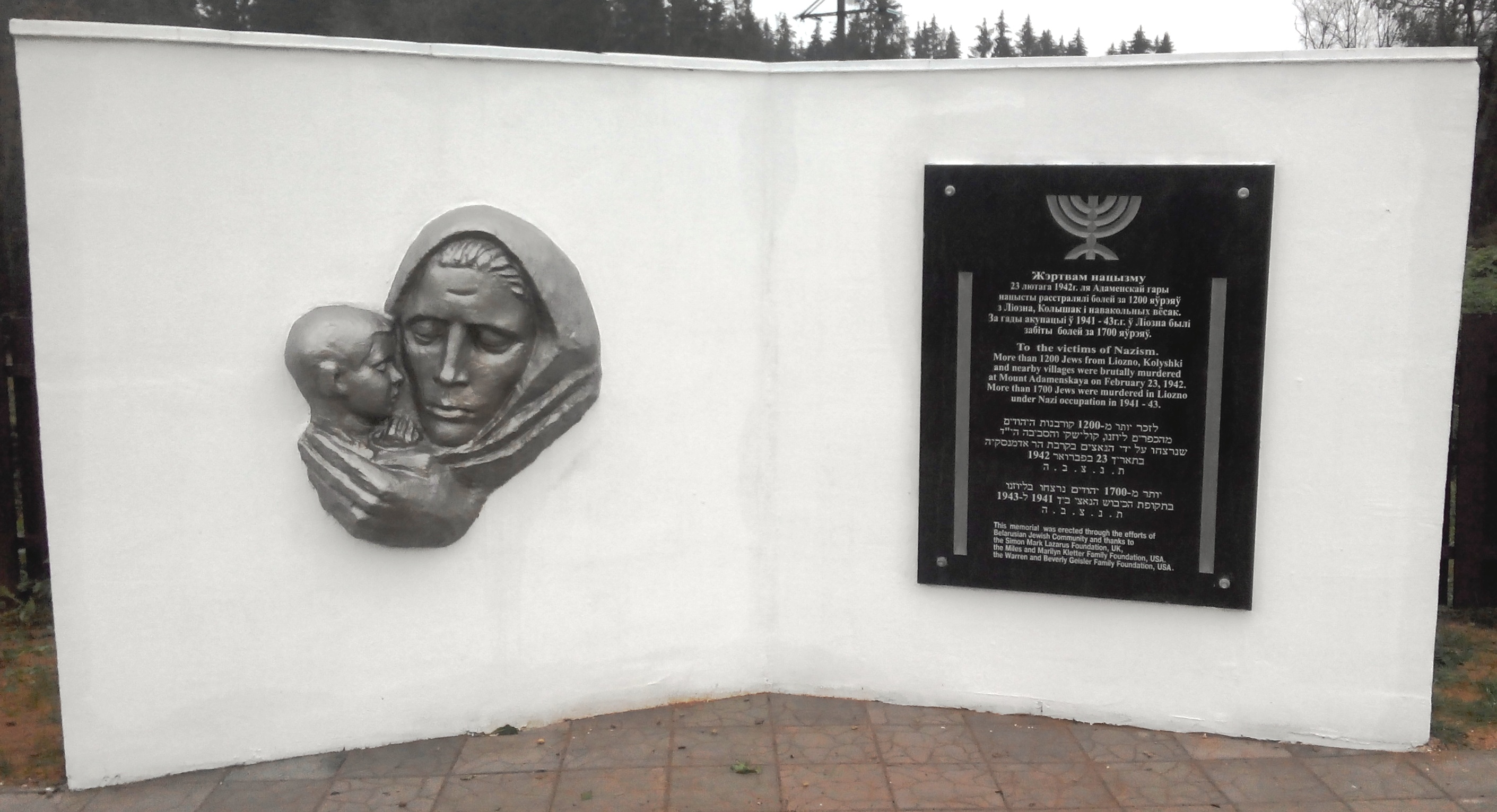
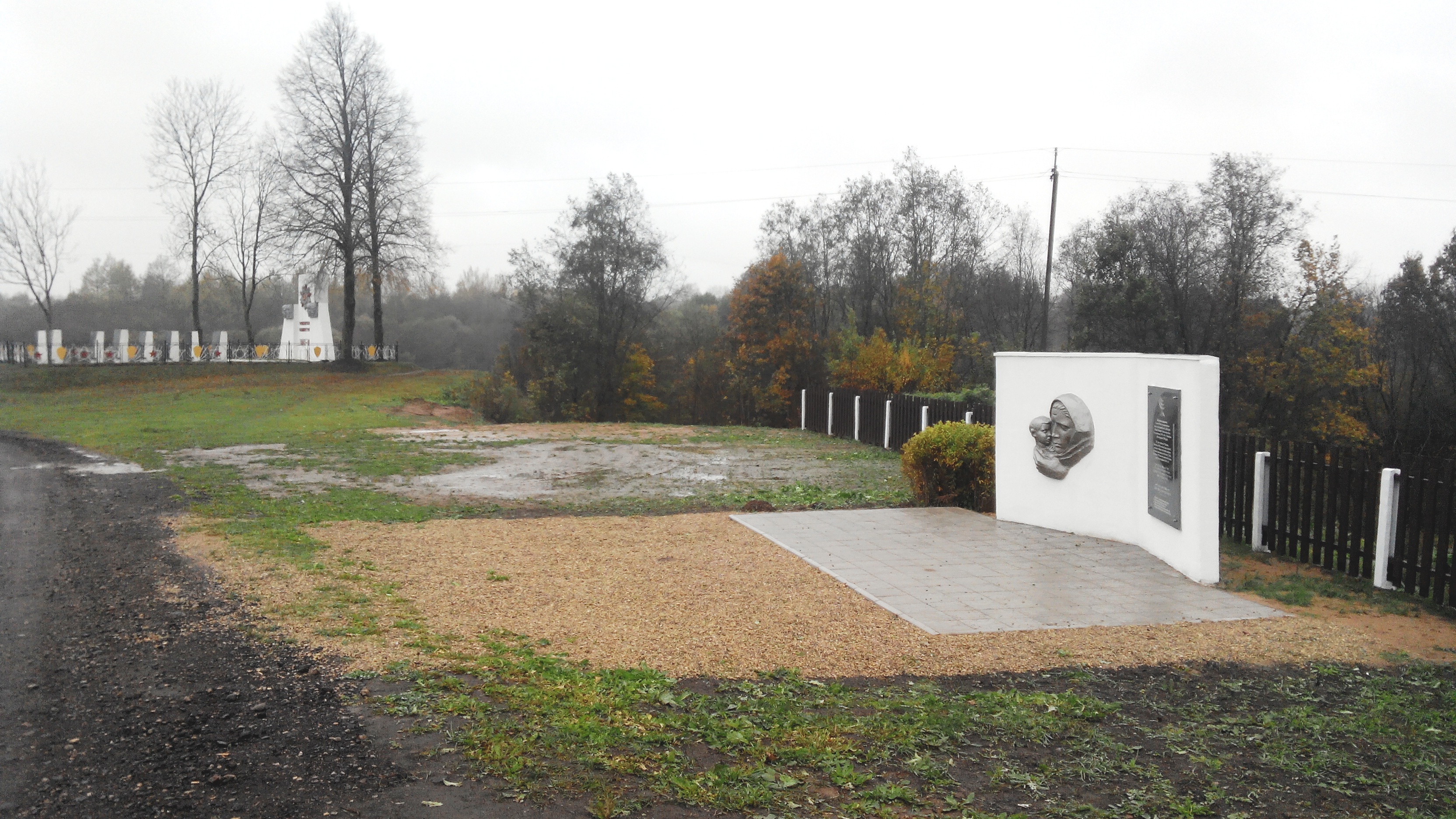
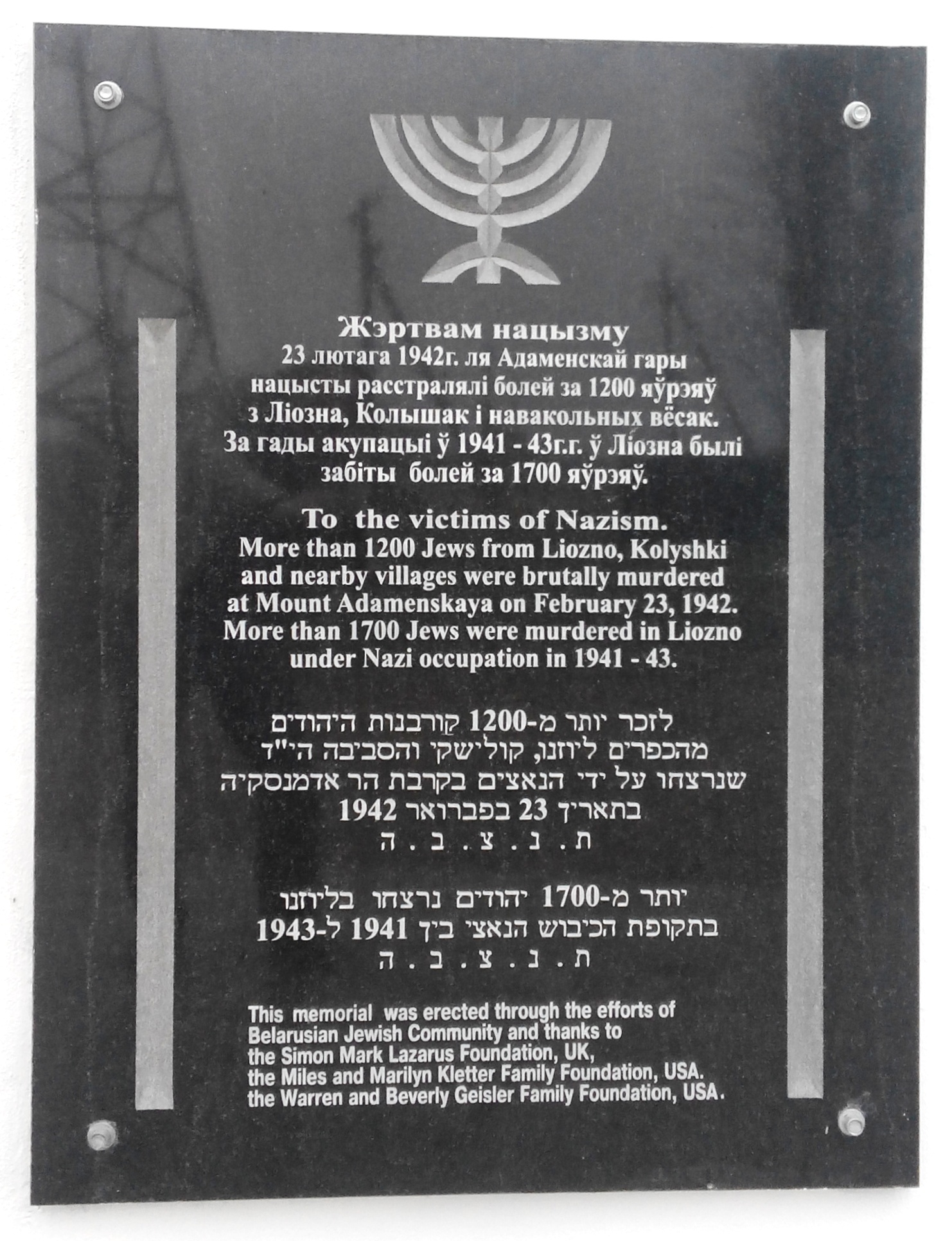
“On February 23, 1942, the Jews of Liozno were forced into a barn on Komsomolskaya Street and locked inside. Twenty people froze to death inside the barn. On February 24, 27 and 28, 1942, the Jews were transported by truck to the ravine near the Adamenki sovkhoz, 500 meters northwest of Liozno and 100 meters from the Mashna River, where they were brutally murdered. The murder operation was carried out by Einsatzkommando 9b and local auxiliary police. The number of victims is estimated to be between 361 (according to German sources) and 1,500 (according to Soviet sources).” (“Murder Story of Liozno Jews at the Adamenki Ravine.” Yad Vashem: The World Holocaust Remembrance Center, Yad Vashem)
“[Witness:] At 2:00 P.M. on February 28, 1942, the Germans and police began to truck all the Jews to one place. I was not at home. When I returned, my relatives had already been put in a truck. Russian comrades hid me in a toilet and nailed the door shut from the outside. Two hours later, when the policemen were gone, I crawled out of my lair. I saw them shoot the Jews, and I saw many go mad. My grandfather and grandmother kissed before death. They loved each other and did not betray their love even in their last minutes of life.” (“Murder Story of Liozno Jews at the Adamenki Ravine.” Yad Vashem: The World Holocaust Remembrance Center, Yad Vashem)
“ [Soviet Reports:] … undertook the excavation at the site where the civilians and prisoners of war had been murdered. The shootings were carried out by the German-fascist invaders in the ravine of the Adamenskaya dacha, 100 meters from the Mashna River and 500 meters from the town of Liozno. During the excavations, the following facts emerged: at the edge of the ravine there is a grave sixteen meters long, six meters wide and four meters deep. When 1.5 meters of the upper layer of soil was removed, corpses of men, women and children were discovered, laid in disarray … In most cases, the cause of death was a gunshot wound through the cranium accompanied by significant destruction of the cranial bones. This indicates that the shooting was carried out at point-blank range, using rifles and machine guns. Some 1,500 people are buried in the grave ….” (“Murder Story of Liozno Jews at the Adamenki Ravine.” Yad Vashem: The World Holocaust Remembrance Center, Yad Vashem)
“At the beginning of the twentieth century, about 1,600 Jews lived in Liozno – about two-thirds of its population. During the Soviet era, many Jews worked in crafts, and some organized themselves into cooperatives. Some became officials in Soviet institutions, and a few turned to agriculture. Due to the processes of urbanization and industrialization in the Soviet Union, many Jews left the town, and by the late 1930s, about 700 Jews remained. A Yiddish school operated in Liozno.” (“Liozno (Liozno).” The Yad Vashem Encyclopedia of the Ghettos During the Holocaust, Yad Vashem)
“The Germans occupied Liozno on July 17, 1941. Already in the first days of the occupation, the houses of the Jews were robbed, and they were ordered to wear armbands with a Star of David. After a while, all the Jews of the town were concentrated on one street with 30-40 houses, and the street became a ghetto. In the fall of 1941, six elderly Jews were murdered in the town. From time to time, Belarusian policemen would break into Jewish homes, beat and rob them. Jews captured in the area were brought to the ghetto, mainly refugees who had fled from Vitebsk, Minsk, Orsha, and others. In the winter of 1941/42, many of the ghetto residents died of a typhus epidemic. On February 23 or 28, 1942, all the ghetto residents – about 360 people – were gathered in a barn, and the next day, Germans and Belarusian policemen murdered them near the Soviet agricultural factory in Adamenki.” (“Liozno (Liozno).” The Yad Vashem Encyclopedia of the Ghettos During the Holocaust, Yad Vashem)