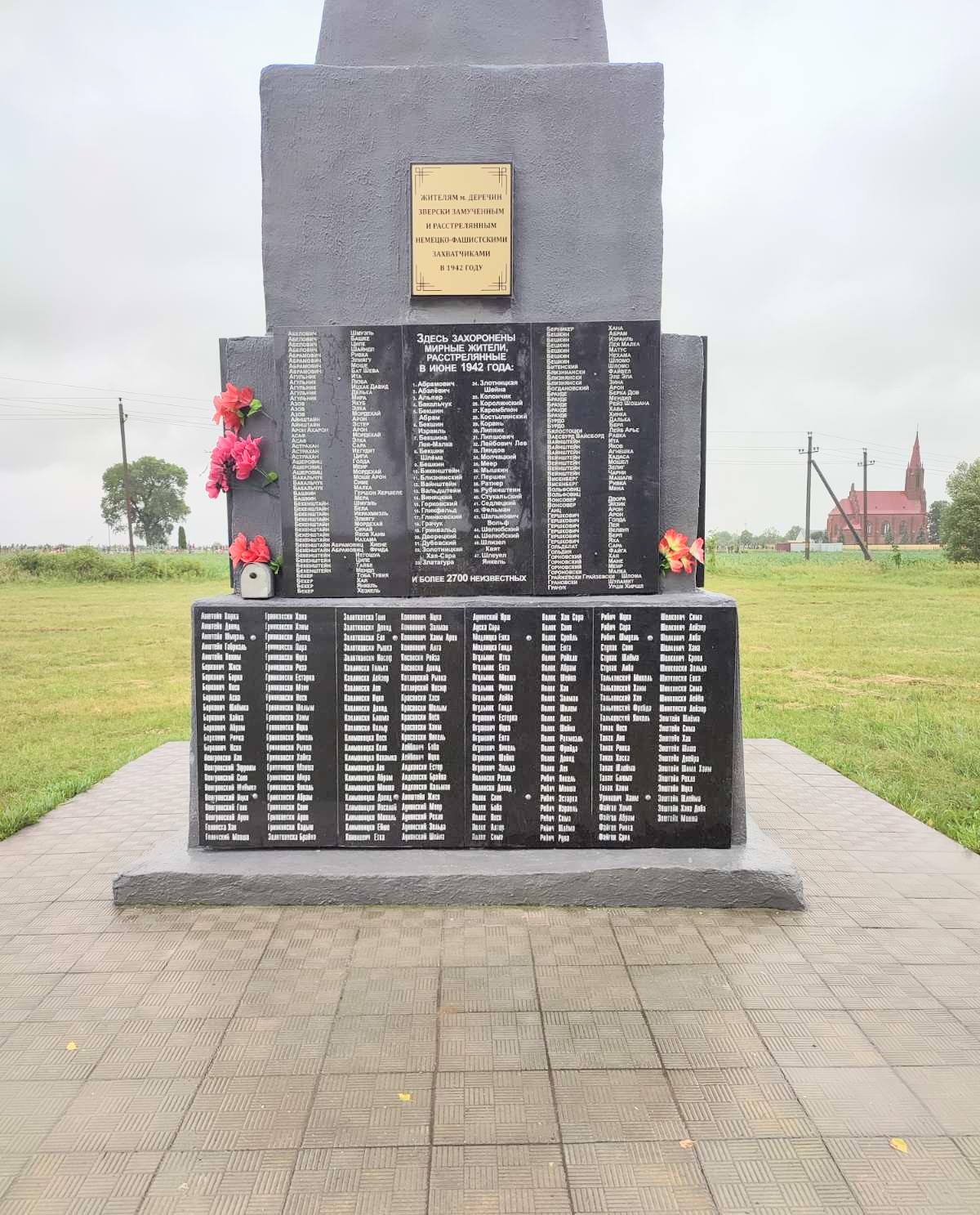
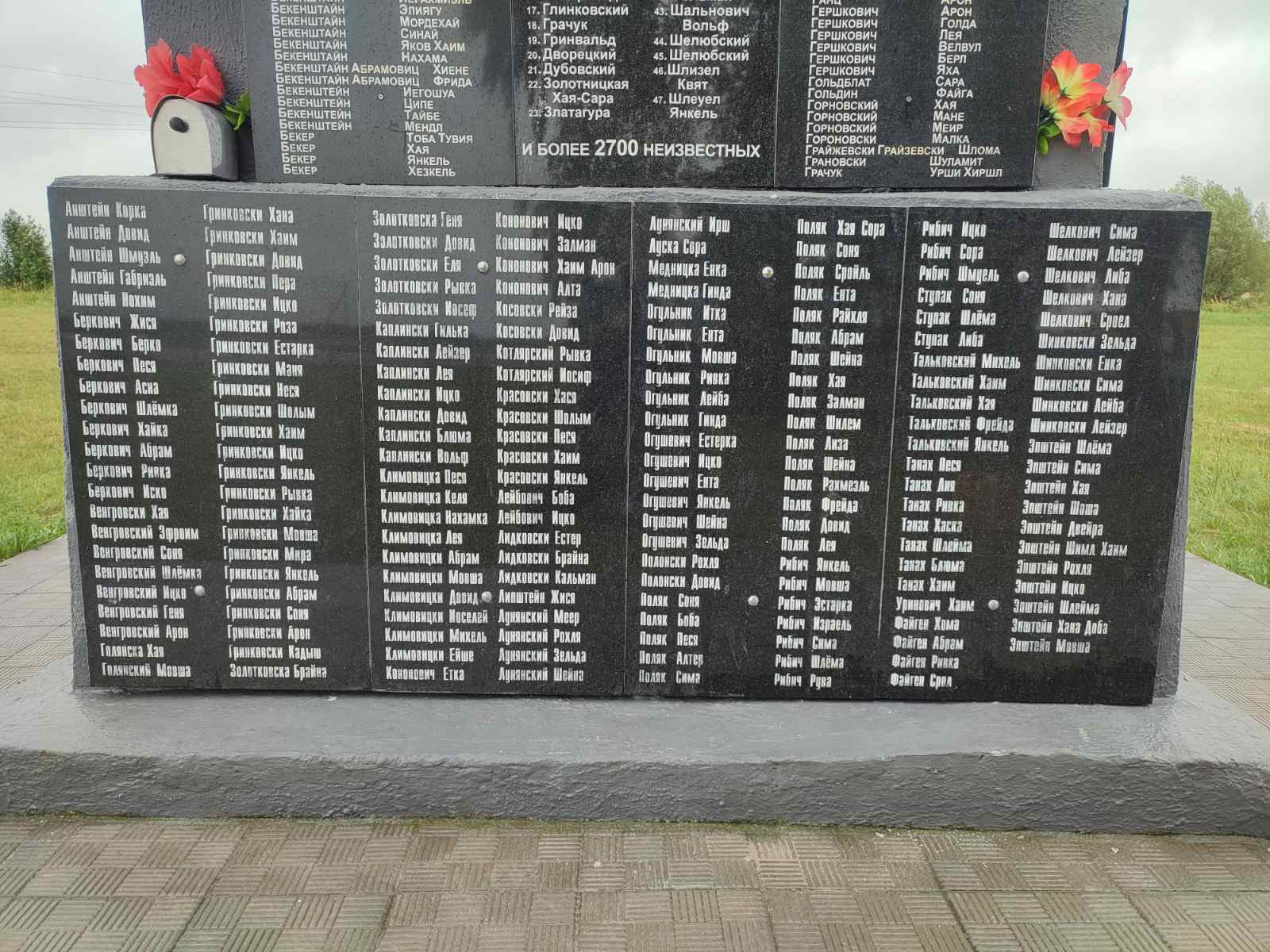

Zelva
“Hunger and deprivation was great, because neither food nor other necessities were available any longer. Everything had been burned up. Only one thing: we did not have a Judenrat, with Jewish police, as was the case in other Polish cities. And in this fashion, we lived in cellars, in constant fear and fatigue, and to earn enough for a little bread, one had to risk one’s life. A few butchers, who were caught selling meat, were hung in the middle of the street in the marketplace. The Jewish population was ordered to come and witness the execution. This is the way they lived in fear for one and a half years, until after Succoth of 1942. They then gathered all the Jews of Zelva, and the Jews from around Volkovysk, and brought them to the stockade in Volkovysk, the stockade for the Russian prisoners of war that were all shot. To a man, they rounded up all the Jews from the surrounding towns, among them Zelva, and from there they were transported to Treblinka, where they were all gassed to death.” (Gelman, Ephraim (Foyka). “Liquidation of Zelva.” Zelva Memorial Book, edited by Yerachmiel Moorstein, translated by Jacob Solomon Berger, JewishGen Yizkor Book Project, 1992)
“The Germans occupied these territories for about three years. They attempted to enforce law and order, and set up a commission, headed by a German-speaking Jew. A school was opened. The Jews began to feel an easing of their condition with reconstruction, and a return to a normal routine. However, it became rapidly clear that the Germans were exploiting the commission for their own purposes. They employed forced labor in the forests, and confiscated whatever the local citizenry had. In this way, the general want and absence of food intensified, and hunger reigned. These were years of want and suffering.” (Gelman, Ephraim (Foyka). “Liquidation of Zelva.” Zelva Memorial Book, edited by Yerachmiel Moorstein, translated by Jacob Solomon Berger, JewishGen Yizkor Book Project, 1992)
“The demographic overview shows that from 1847 to 1897, the population of Jews in Zelva grew by about 1000, proving that this 50-year period was a period of growth, aided in part by the creation of the Warsaw – Moscow railroad line, on which Zelva was one of the stops.” (Gelman, Ephraim (Foyka). “Liquidation of Zelva.” Zelva Memorial Book, edited by Yerachmiel Moorstein, translated by Jacob Solomon Berger, JewishGen Yizkor Book Project, 1992)